Freelance statistics disagree because each source counts something different. The U.S. government counts people whose main job is independent work. Industry surveys count anyone who earned money on their own in the past year. The first number is far smaller than the second, and both are real.
This page pulls the figures together from agencies such as the Bureau of Labor Statistics, the Census Bureau, the Federal Reserve and the SBA, plus first-party research from Upwork, Fiverr, MBO Partners and Remote. Every figure links to the body that published it and carries a date.
It covers how many people freelance in the U.S. and abroad, who they are, why they do it, what they earn, how often they are paid late, which written-contract laws apply, and where the work is heading. Updated October 2026. The page is refreshed monthly.
Key Takeaways
- 11.9 million people were independent contractors on their main job in July 2023, 7.4% of total U.S. employment (BLS, Nov 2024).
- A record 74.9 million Americans earn income independently in 2026 (MBO Partners, Sep 2026).
- U.S. nonemployer firms nearly doubled from 15.4 million in 1997 to 29.8 million in 2022, and now make up 82.3% of small businesses (SBA Office of Advocacy, Feb 2026).
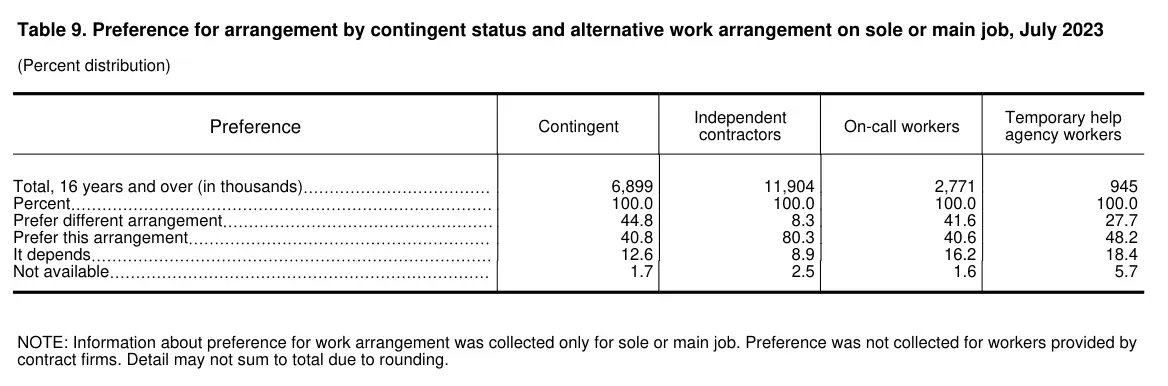
- 80.3% of independent contractors prefer their work arrangement, and 8.3% would prefer a traditional job (BLS, Nov 2024).
- Full-time independent contractors had median weekly earnings of $949, against $1,132 for workers in traditional arrangements (BLS, Nov 2024).
- 85% of freelancers surveyed have their invoices paid late at least some of the time (Remote, Apr 2025).
- 49% of freelancers who complained to New York City and answered its follow-up survey said they were paid nothing (NYC DCWP, Nov 2023).
- 58% of self-employed adults said their income varied from month to month, against 28% of people who work for someone else (Federal Reserve Board, May 2026).
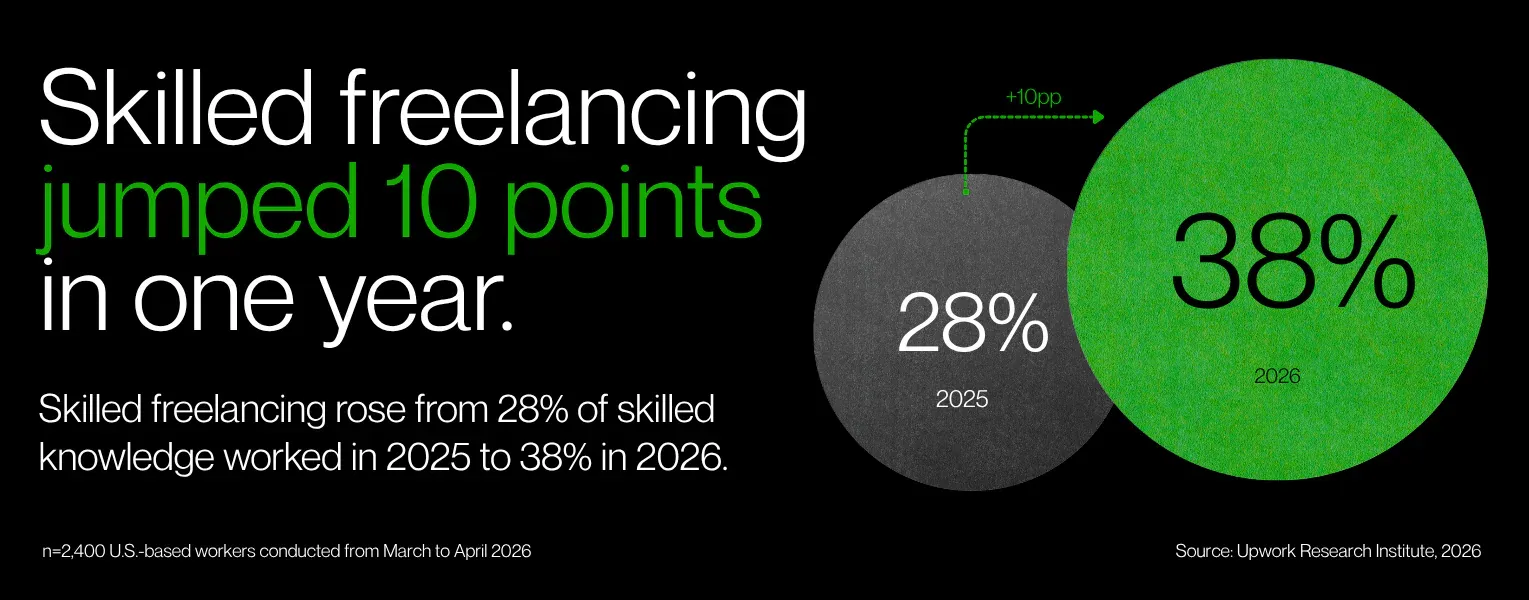
- 38% of skilled U.S. knowledge workers now freelance, up from 28% a year earlier (Upwork, Jul 2026).
- Fiverr’s annual active buyers fell 21.9% year over year to 2.7 million (Fiverr, Jul 2026).
- 36% of nonemployer firms reported annual revenue of $25,000 or less (Federal Reserve Banks, Jul 2026).
- 42% of nonemployer firms work as independent contractors for other businesses or agencies (Federal Reserve Banks, Jul 2026).
- 46.4% of global employment was self-employment in 2025, on modeled ILO estimates (World Bank, Oct 2026).
- Late payments close 38 UK businesses every day (GOV.UK, May 2026).
How Many Freelancers Are There in the U.S.?
Pick the definition before you quote a number. A survey week, a tax filing and a twelve-month recall question give different answers, and none of them is wrong.
What does the federal government count?
BLS counts independent contractors on a person’s main job, and the group includes independent consultants and freelance workers (BLS, Nov 2024).
- The share was 6.9% in May 2017, the last time the survey ran before 2023 (BLS, Nov 2024).
- 84.6% of independent contractors on their main job were self-employed (BLS, Nov 2024).
- Nearly two-thirds of all self-employed people were independent contractors (BLS, Nov 2024).
- In September 2026, 9.58 million workers were unincorporated self-employed and 6.90 million ran incorporated businesses (BLS, Oct 2026).
How many U.S. businesses have no employees?
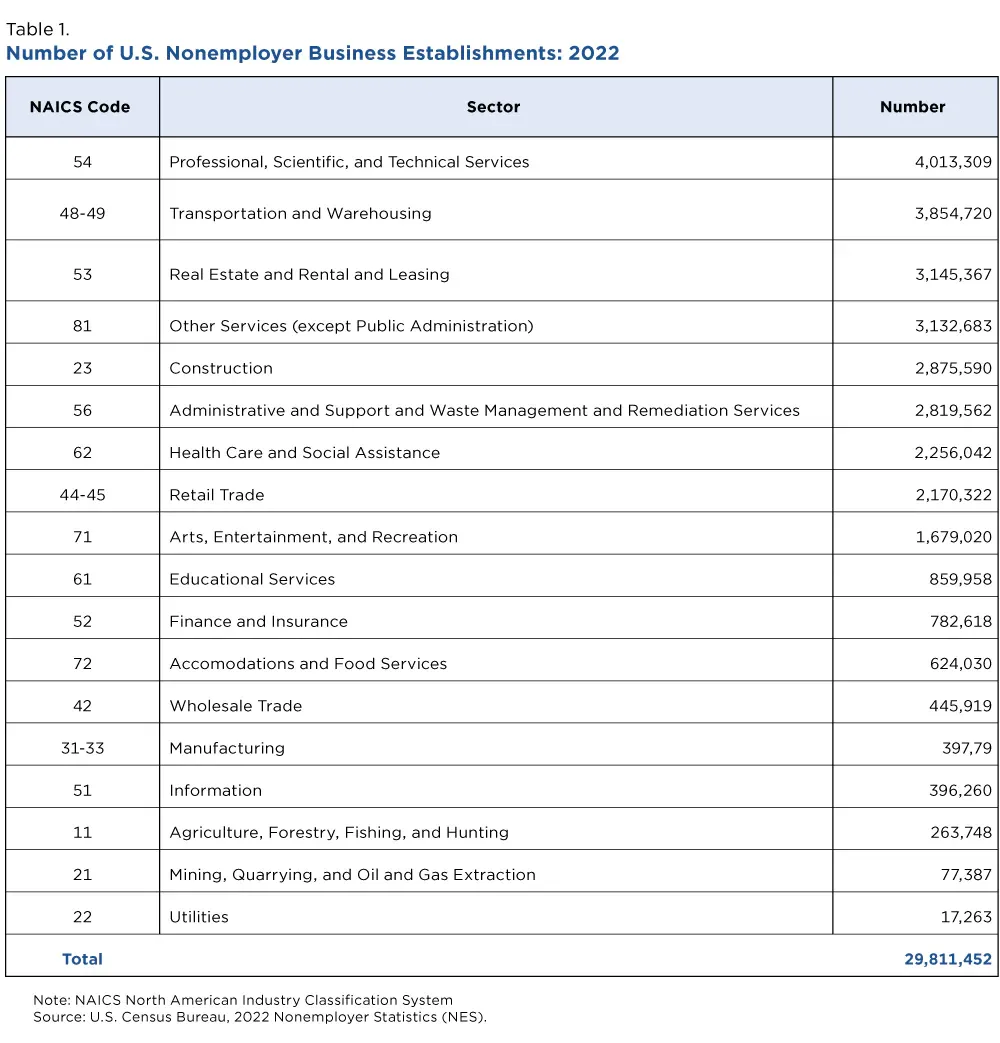
The Census Bureau counted 8.3 million employer businesses in 2022, a small group next to the solo businesses around them (Census Bureau, May 2025).
- Professional, scientific and technical services was the largest nonemployer sector, with 4,013,209 businesses (Census Bureau, May 2025).
- Florida had the highest rate, 13.3 nonemployer businesses per 100 residents, against 8.9 nationally (Census Bureau, May 2025).
- West Virginia had the lowest rate, 5.3 per 100 residents (Census Bureau, May 2025).
How many Americans freelance by industry surveys?
Industry surveys cast a wider net than BLS and land far higher. Full-time independents grew 114% since 2020 (MBO Partners, Sep 2026).
- Full-time independents are now 22% of all full-time U.S. workers, nearly twice their 2019 share (MBO Partners, Sep 2026).
- Nearly 12 million independent service professionals build businesses around specialized expertise (MBO Partners, Sep 2026).
- 64 million Americans, 38% of the workforce, did freelance work in the past year in Upwork’s 2023 survey, up from 60 million in 2022 (Upwork, Dec 2023).
- Upwork’s first count in 2014 was 53 million (Upwork, Dec 2023).
- About 20 million U.S. workers did skilled knowledge freelance work in 2024, earning over $1.5 trillion (Upwork, Apr 2025).
Why do the counts differ so much?
Each source draws its own boundary. Fiverr, working from Census nonemployer data, counted 6.9 million independent professionals in creative, technical and professional fields (Fiverr, Dec 2025).
- That count covers 26 NAICS industry codes and leaves out the rest of the nonemployer economy (Fiverr, Dec 2025).
How Many People Work for Themselves Outside the U.S.?
Official surveys abroad count the self-employed, not freelancers. Read those totals as a ceiling for freelancing, because farmers and shop owners sit inside them.
How large is self-employment worldwide?
Self-employment shares vary widely by country. OECD members averaged 15.5% in 2025 (World Bank, Oct 2026).
- The European Union averaged 14.2% (World Bank, Oct 2026).
- The United States stood at 6.1% (World Bank, Oct 2026).
- India stood at 74.9% (World Bank, Oct 2026).
- Italy stood at 21.1% and Germany at 8.1% (World Bank, Oct 2026).
How many self-employed people are in Europe?
Eurostat counted 26.1 million self-employed people aged 15 to 64 in the EU in 2025 (Eurostat, Sep 2026).
- 17.7 million of them had no employees (Eurostat, Sep 2026).
- Italy had 2.92 million own-account workers and Germany 1.41 million (Eurostat, Sep 2026).
- In the 2017 EU survey module, 61.2% of the self-employed had more than nine clients in the prior 12 months (Eurostat, Nov 2018).
- In that module, 18.2% had one client or a dominant client (Eurostat, Nov 2018).
What do the UK, Canada and Australia report?
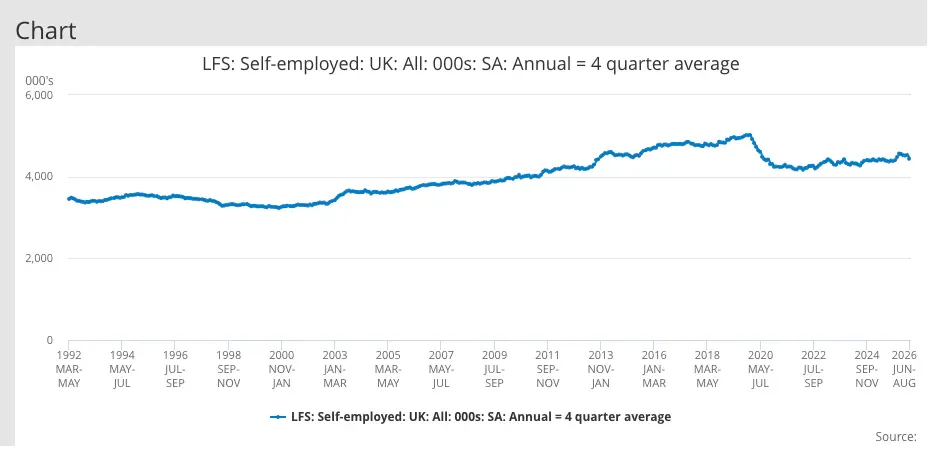
The UK had 4.44 million self-employed people in June to August 2026 (ONS, Oct 2026).
- The UK peak was 5.02 million in December 2019 to February 2020 (ONS, Oct 2026).
- Canada had 2.74 million self-employed workers in September 2026, out of 21.1 million employed (Statistics Canada, Oct 2026).
- Australia had 1.1 million independent contractors in August 2025, 7.6% of employed people (ABS, Dec 2025).
- That was 33,000 more than a year earlier (ABS, Dec 2025).
Do freelancers sell across borders?
Some do, most do not. One-third of independent professionals now serve customers outside the United States, nearly three times the 2012 share (MBO Partners, Sep 2026).
- 82% of U.S. nonemployer firms had no international sales in 2024 (Federal Reserve Banks, Jul 2026).
- 37% of companies surveyed hire freelancers in countries where they have no office (Remote, Apr 2025).
- The other 63% hire only where they have an office (Remote, Apr 2025).
Who Are the People Working as Freelancers?
The official data says older and male. The industry surveys say younger and more mixed. Both can hold, because they measure different slices of independent work.
How does age shape independent work?
Independent work rises with age in the federal data. 11.5% of workers aged 55 and over were independent contractors, against 6.9% of those aged 25 to 54 and 2.2% of those aged 16 to 24 (BLS, Nov 2024).
- 36% of independent contractors were 55 or older, against 22% of workers in traditional arrangements (BLS, Nov 2024).
- In Upwork’s 2023 survey, 52% of Gen Z professionals freelanced, against 44% of Millennials, 30% of Gen X and 26% of Boomers (Upwork, Dec 2023).
- Gen Z makes up 28% of the independent workforce (MBO Partners, Sep 2025).
- 45% of employers surveyed have noticed more freelancers aged 55 and over (Remote, Apr 2025).
What do gender, race and ethnicity show?
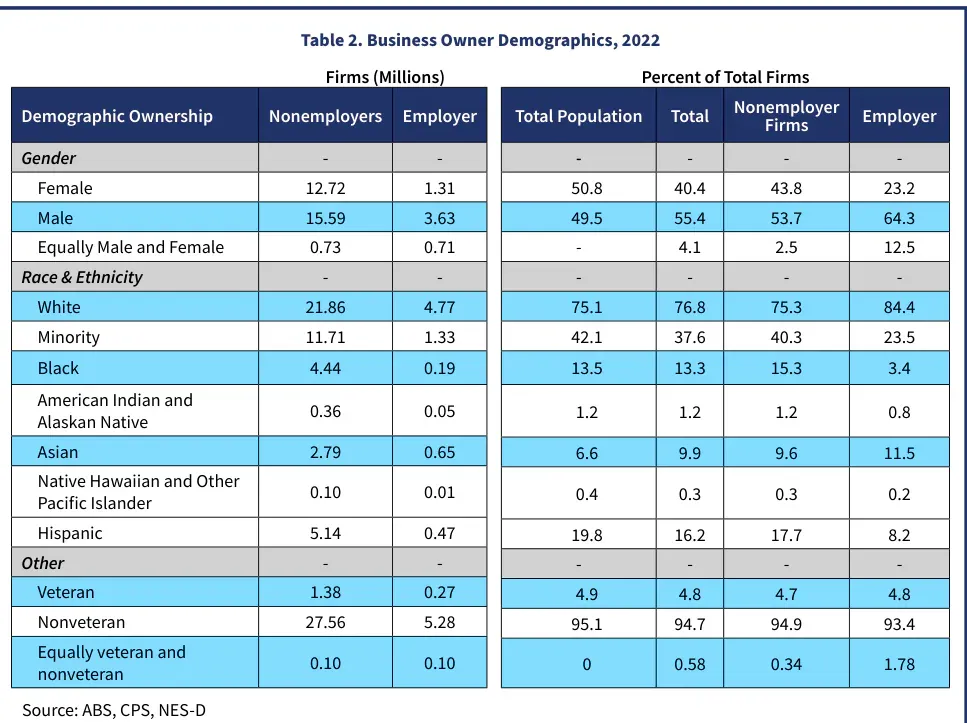
Men were more likely than women to be independent contractors, 8.7% against 5.8% (BLS, Nov 2024).
- White workers were 7.9% independent contractors and Hispanic or Latino workers 7.4%, against 5.4% for Black workers and 5.4% for Asian workers (BLS, Nov 2024).
- Women owned 12.72 million nonemployer firms in 2022 (SBA Office of Advocacy, Feb 2026).
- Black owners held 4.44 million nonemployer firms, 15.3% of the total against 13.5% of the population (SBA Office of Advocacy, Feb 2026).
- Hispanic owners held 5.14 million, 17.7% of nonemployer firms against 19.8% of the population (SBA Office of Advocacy, Feb 2026).
- Veterans owned 1.38 million nonemployer firms (SBA Office of Advocacy, Feb 2026).
Is freelancing a main job or a side job?
For most it is the main job. 70.7% of independent contractors worked full time (BLS, Nov 2024).
- Part-time workers were 13.1% independent contractors, against 6.2% of full-time workers (BLS, Nov 2024).
- 1.9 million people were independent contractors on a second job, 22.8% of all multiple jobholders (BLS, Nov 2024).
- 62% of nonemployer owners say the business is their only job (Federal Reserve Banks, Jul 2026).
- 19% have more than one job and say the business is not their main one (Federal Reserve Banks, Jul 2026).
- Two-thirds of skilled knowledge freelancers have worked this way for over three years, and 18% for over ten (Upwork, Apr 2025).
- 30% of the self-employed worked entirely from home in 2025 (Federal Reserve Board, May 2026).
Which kinds of work have the most independent contractors?
Creative work leads. 28.1% of workers in arts, design, entertainment, sports and media occupations were independent contractors (BLS, Nov 2024).
- Personal care and service occupations followed at 19.7% (BLS, Nov 2024).
- 33% of skilled freelancers run their own business, and 43% team up through an agency model (Upwork, Apr 2025).
Why Do People Choose to Freelance?
Most are there by choice, and most plan to stay. The pull is control over time and income more than any single perk.
Do independent contractors like how they work?
Compare them with contingent workers, 44.8% of whom would prefer a permanent job (BLS, Nov 2024).
- 63% of independents say their independence is fully by choice (MBO Partners, Sep 2025).
- 73% are optimistic about their careers (MBO Partners, Sep 2025).
- More than three-quarters report high satisfaction with independent work, and 1% are dissatisfied (MBO Partners, Sep 2026).
What reasons do freelancers give?
Being the boss comes first. 41% of freelancers surveyed went freelance to be their own boss (Remote, Apr 2025).
- 31% needed the extra income (Remote, Apr 2025).
- 25% believed they could earn more freelancing (Remote, Apr 2025).
- 11% lost a full-time job and could not find a new one (Remote, Apr 2025).
- 58% named a flexible schedule as the biggest advantage, and 50% named working from anywhere (Remote, Apr 2025).
- In the EU’s 2017 module, 22.7% of the self-employed gave a suitable opportunity as their main reason for starting (Eurostat, Nov 2018).
Do freelancers plan to stay?
Few plan to leave. Only 7% of freelancers surveyed plan to return to employment, and 44% plan to freelance full time (Remote, Apr 2025).
- 78% of independent professionals plan to stay independent or build a larger business (MBO Partners, Sep 2026).
- 36% of traditional employees already have a side gig (MBO Partners, Sep 2025).
- 87% of skilled knowledge freelancers prefer work that builds their skills over work that only uses what they have (Upwork, Apr 2025).
How Much Do Freelancers Earn?
Typical pay is modest and the spread is wide. The median full-time contractor earns less per week than an employee, while millions bill six figures.
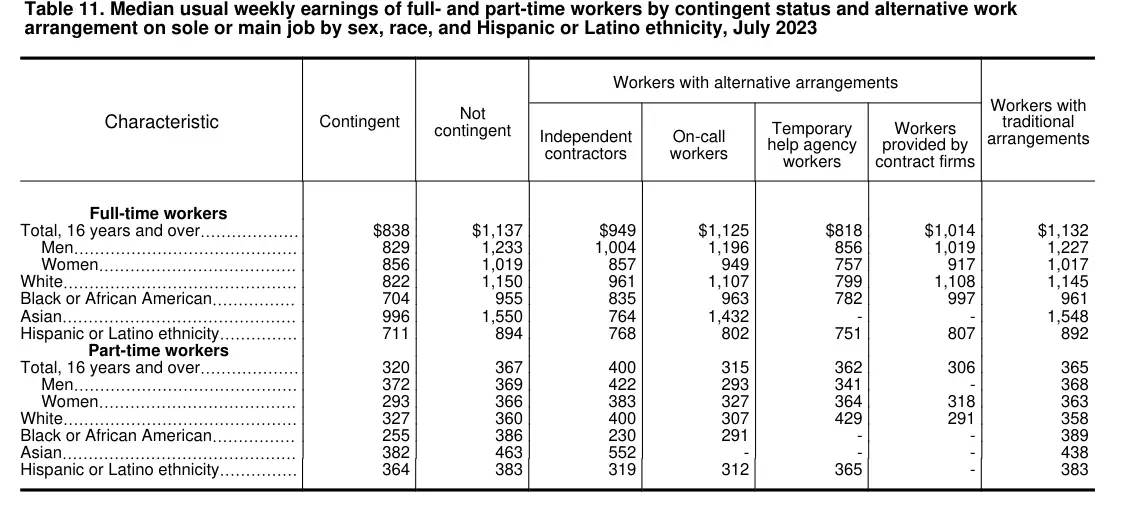
What do independent contractors earn per week?
Men working full time as independent contractors earned $1,004 a week and women $857 (BLS, Nov 2024).
- By race and ethnicity, full-time medians were $961 for White, $835 for Black, $768 for Hispanic or Latino and $764 for Asian contractors (BLS, Nov 2024).
- Part-time independent contractors had a median of $400 a week (BLS, Nov 2024).
How many freelancers earn six figures?
A record 5.8 million independent professionals earn more than $100,000 a year, nearly double the 2020 count (MBO Partners, Sep 2026).
- 59% of independents say they earn more working independently (MBO Partners, Sep 2025).
- Full-time skilled freelancers had a median income of $85,000 in 2024 (Upwork, Apr 2025).
- Skilled moonlighters earned $40,000 on top of their full-time wages (Upwork, Apr 2025).
- 78% of skilled freelancers were satisfied with their pay, against 64% of full-time employees (Upwork, Apr 2025).
What do solo business owners report?
17% of nonemployer firms reported annual revenue between $100,000 and $250,000 (Federal Reserve Banks, Jul 2026).
- At the end of 2024, 41% were operating at a loss and 38% at a profit (Federal Reserve Banks, Jul 2026).
- Firms that work as independent contractors did better: 42% were profitable, against 35% of other nonemployers (Federal Reserve Banks, Jul 2026).
- Revenue fell for 38% in the prior 12 months and rose for 34% (Federal Reserve Banks, Jul 2026).
What does marketplace work pay?
Freelancers who perform AI work on Upwork earn 34% more per hour than those who do not (Upwork, Jul 2026).
- AI-based execution tasks saw earnings fall 28% year over year (Upwork, Jul 2026).
- Gross services volume per active client reached $5,230 in the second quarter of 2026 (Upwork, Aug 2026).
- Fiverr buyers spent $368 each over the year to June 2026, up 15.6% (Fiverr, Jul 2026).
- Fiverr’s marketplace take rate was 28.0% (Fiverr, Jul 2026).
How Hard Is It to Get Paid on Time?
Late payment shows up in every survey and every complaint file. It also hits people who have little cash buffer.
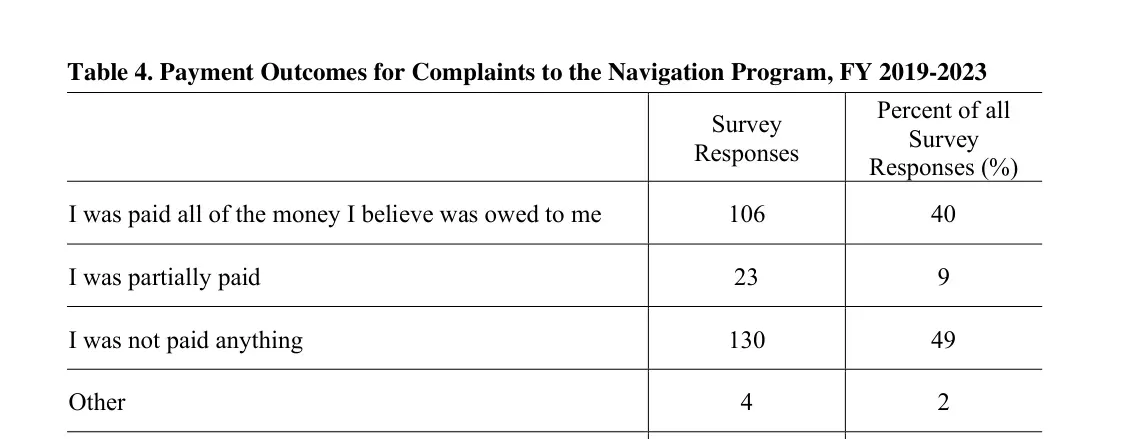
How often are freelancers paid late?
More than 21% of freelancers surveyed are paid late, or not at all, over half the time (Remote, Feb 2025).
- 31% of freelancers surveyed said getting paid on time concerned them most about freelancing (Remote, Apr 2025).
- 18% said getting paid accurately concerned them most (Remote, Apr 2025).
- 49% of companies manage freelancer contracts and billing with in-house tools such as spreadsheets (Remote, Apr 2025).
What does uneven cash flow do to solo firms?
43% of nonemployer firms named uneven cash flow, including collecting on receivables, as a financial challenge (Federal Reserve Banks, Jul 2026).
- Among firms that work as independent contractors the share was higher, at 47% (Federal Reserve Banks, Jul 2026).
- 19% of nonemployer firms with financial challenges responded by making a late payment or not paying (Federal Reserve Banks, Jul 2026).
A dated payment schedule is one way to plan for this. A payment plan contract sets out the total, the installments and the late fee in writing.
What happens when freelancers complain?
Since 2017, New York City has received nearly 4,300 complaints, closed more than 3,500 cases and helped freelancers recover over $3,470,000 (NYC DCWP, Jun 2025).
- In fiscal years 2019 to 2023, 2,184 of 2,542 complaints alleged unlawful payment practices such as late payment and non-payment (NYC DCWP, Nov 2023).
- Of survey respondents, 40% were paid in full and 9% were partly paid (NYC DCWP, Nov 2023).
- 16% of complainants later pursued their claim in court, and 9% used mediation or arbitration (NYC DCWP, Nov 2023).
- 51% of the contracts in complaints were worth $5,000 or less, and 22% were worth $1,000 or less (NYC DCWP, Nov 2023).
- A 2023 settlement required L’Officiel USA to pay more than $275,000, double the amount owed, to 41 freelancers (NYC DCWP, Nov 2023).
Is late payment a problem outside the U.S.?
The UK government says late payments cost its economy £11 billion a year (GOV.UK, May 2026).
- A UK bill introduced in May 2026 would cap payment terms at 60 days for large firms paying smaller suppliers, with mandatory interest of 8% above the Bank of England base rate (GOV.UK, May 2026).
How Common Are Written Contracts, and What Do the New Laws Require?
A growing list of places require a written contract for freelance work. The thresholds are low, so most paid projects fall inside them. This section reports what each body says. It is not legal advice. A simple service agreement is one way to put scope, price and payment date in writing.
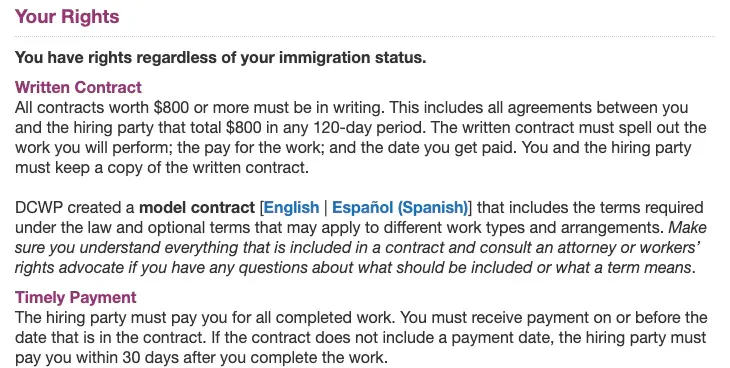
Which U.S. places require written freelance contracts?
New York City requires a written contract for work worth $800 or more, counting all agreements with one client that total $800 in any 120-day period (NYC DCWP, Jun 2025).
- The city law took effect on May 15, 2017 as Local Law 140 of 2016 (NYC DCWP, Nov 2023).
- New York State added its own Freelance Isn’t Free Act on August 28, 2024 (NY State DOL, Aug 2024).
- Illinois covers work worth $500 or more in a 120-day period under contracts that took effect after July 1, 2024 (Illinois DOL, Jul 2024).
- California requires a written contract from January 1, 2025 for work worth $250 or more, alone or with other contracts in the prior 120 days (California Legislature, Jan 2025).
- Los Angeles covers $600 or more in a calendar year under contracts from July 1, 2023 (Los Angeles Office of Wage Standards, Aug 2023).
What must a contract say, and when must clients pay?
New York City’s rule asks the contract to spell out the work, the pay and the date of payment (NYC DCWP, Jun 2025).
- When no date is written, payment is due within 30 days after the work is done (NYC DCWP, Jun 2025).
- A freelancer who wins can recover statutory damages, double damages and attorney’s fees (NYC DCWP, Nov 2023).
- 264 of the 2,542 complaints in fiscal years 2019 to 2023 alleged a missing written contract (NYC DCWP, Nov 2023).
How often do clients and freelancers disagree about status?
40% of freelancers surveyed believe they were misclassified as contractors when they should have been employees (Remote, Apr 2025).
- 36% of companies surveyed admit to sometimes or always misclassifying employees as contract workers (Remote, Apr 2025).
- 18% of employers said their team faced contractor misclassification issues (Remote, Apr 2025).
- 21% of employers reported inaccurate reporting on billable hours (Remote, Apr 2025).
Do solo firms hire contractors too?
Yes. 38% of nonemployer firms used contract workers in the prior 12 months (Federal Reserve Banks, Jul 2026).
- 15% describe their work as gig work (Federal Reserve Banks, Jul 2026).
- 65% earn at least 10% of their sales from individuals, and 38% from other businesses (Federal Reserve Banks, Jul 2026).
How Stable Is Freelance Income, and What About Benefits?
Freelancers trade a boss for an income that swings. The Federal Reserve’s household survey shows how often the swing bites.
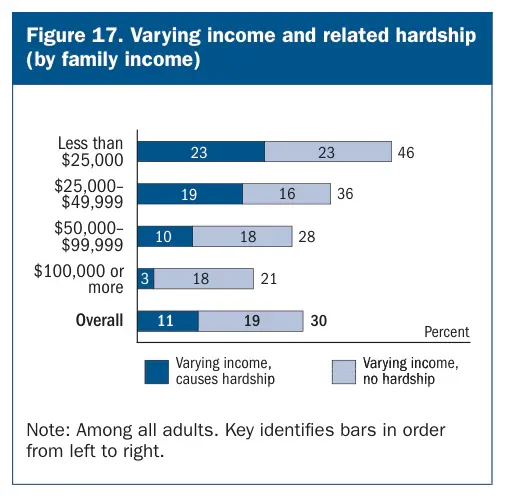
How much do incomes swing from month to month?
30% of all adults had income that varied at least occasionally in 2025, and 11% struggled to pay bills because of it (Federal Reserve Board, May 2026).
- Among the self-employed, 22% struggled to pay bills because of varying income, against 10% of people who work for someone else (Federal Reserve Board, May 2026).
How do freelancers cover the gaps?
Nonemployer firms with financial challenges relied on the owner’s personal funds more than employer firms did, 64% against 54% (Federal Reserve Banks, Jul 2026).
- 31% do not regularly use external financing (Federal Reserve Banks, Jul 2026).
- About half had no debt at the time of the survey (Federal Reserve Banks, Jul 2026).
- 30% rated their financial condition poor and 39% fair (Federal Reserve Banks, Jul 2026).
- 52% regularly use a credit card (Federal Reserve Banks, Jul 2026).
What about health insurance and retirement?
74.2% of independent contractors had health insurance from some source, against 84.9% of workers in traditional arrangements (BLS, Nov 2024).
- 23% of freelancers surveyed said affordable health insurance concerned them most about freelancing (Remote, Apr 2025).
- 21% named preparing for retirement (Remote, Apr 2025).
- 42% named a stable job and income (Remote, Apr 2025).
Where Is Freelance Work Headed?
The headcount is still climbing, but demand on the big marketplaces is softening and AI is changing which work pays. The data point to more people freelancing and falling pay for simple tasks.
Is freelancing still growing?
58% of full-time employees now say they are considering freelancing, up from 36% a year earlier (Upwork, Jul 2026).
- MBO Partners counted 72.9 million independents in 2025, so the 2026 record is two million higher (MBO Partners, Sep 2025).
- 52% of employers surveyed said their use of freelancers rose over the past three years, and 8% said it fell (Remote, Apr 2025).
- 61% of nonemployer firms expect revenue to rise in the next 12 months (Federal Reserve Banks, Jul 2026).
- Nearly a third plan to add employees (Federal Reserve Banks, Jul 2026).
Are the big marketplaces growing too?
Not at the moment. Fiverr’s second-quarter revenue fell 10.0% year over year to $97.8 million (Fiverr, Jul 2026).
- Its marketplace revenue fell 15.5% to $63.1 million (Fiverr, Jul 2026).
- Upwork’s gross services volume was $966.4 million, down 4% (Upwork, Aug 2026).
- Upwork had 763,000 active clients (Upwork, Aug 2026).
- Upwork’s volume from AI-related work grew more than 22% (Upwork, Aug 2026).
How is AI changing freelance work?
74% of independents use generative AI to improve productivity (MBO Partners, Sep 2025).
- Generative AI users report average time savings of nearly 10 hours per week (MBO Partners, Sep 2026).
- 40% of nonemployer firms currently use AI, and 46% of those that work as independent contractors do (Federal Reserve Banks, Jul 2026).
- 41% of freelancers use AI agents for autonomous task execution, against 34% of full-time employees (Upwork, Jul 2026).
- Generative AI and creative production work grew 90% in contract starts while per-contract earnings fell 13% (Upwork, Jul 2026).
Methodology and Sources
Each figure comes from the body that produced the data, and each link goes to that body’s report, release, filing or data table. Roundups and blogs that repeat other people’s numbers are not used. Where two sources measure different things, the text says so and names both. Figures are as the source states them, and the date beside each is the month the source was published or last updated. Industry surveys such as Upwork’s and MBO Partners’ use their own definitions of freelancing, so their counts are not comparable with BLS or Census counts. Survey-based figures carry sampling error. The statistics on laws and courts are reported as each agency states them. This page reports data. It is not legal or tax advice, and it does not say that any contract is legally binding anywhere. The page is refreshed monthly.
Sources
- BLS, Contingent and Alternative Employment Arrangements, July 2023
- BLS, Employment Situation, Table A-9, September 2026
- U.S. Census Bureau, 2022 Nonemployer Statistics story
- SBA Office of Advocacy, Frequently Asked Questions About Small Business 2026
- Federal Reserve Banks, 2026 Chartbook on Nonemployer Firms
- Federal Reserve Banks, Nonemployer Firms data appendix, 2025 survey
- Federal Reserve Board, Economic Well-Being of U.S. Households in 2025
- MBO Partners, 2026 State of Independence press release
- MBO Partners, 2026 State of Independence report page
- MBO Partners, 2025 State of Independence report page
- MBO Partners, 2025 State of Independence press release
- Upwork Research Institute, Future Workforce Index 2026
- Upwork Research Institute, Future Workforce Index 2025
- Upwork Research Institute, Freelance Forward 2023
- Upwork, Second Quarter 2026 financial results (SEC Exhibit 99.1)
- Fiverr, Second Quarter 2026 results (GlobeNewswire)
- Fiverr, Freelance Economic Impact Report press release, December 2025 (GlobeNewswire)
- Remote, The State of Freelance Work 2025
- Remote, late payment culture article, 2025
- NYC DCWP, 5-Year Report on NYC’s Freelance Isn’t Free Act
- NYC DCWP, BuzzFeed settlement release, June 2025
- NYC DCWP, Freelance Workers: Your Rights
- New York State Department of Labor, Freelance Isn’t Free Act
- Illinois Department of Labor, Freelance Worker Protection Act
- California Legislature, SB 988 (Freelance Worker Protection Act)
- Los Angeles Office of Wage Standards, Freelance Worker Protections Ordinance rules
- World Bank, Self-employed, total (% of total employment), modeled ILO estimate
- Eurostat, Employed persons by professional status (lfsa_egaps)
- Eurostat, Self-employment statistics (2017 ad hoc module)
- Office for National Statistics, LFS self-employed, UK (MGRQ)
- Statistics Canada, Table 14-10-0288-01, Employment by class of worker
- Australian Bureau of Statistics, Working arrangements, August 2025
- GOV.UK, Largest crackdown on late payments in over 25 years
Glossary
- BLS: The U.S. Bureau of Labor Statistics.
- CWS: The Contingent Worker Supplement, a survey added to the Current Population Survey in July 2023.
- Independent contractor: In the BLS survey, a person working as an independent contractor, independent consultant or freelance worker, whether or not they are self-employed.
- Nonemployer firm: A business with no paid employees besides its owners. Most are sole proprietorships.
- Employer firm: A business with at least one paid employee.
- NES: Nonemployer Statistics, the Census Bureau’s yearly count built from IRS business tax records.
- NAICS: The North American Industry Classification System, the code list used to sort businesses by industry.
- SBCS: The Small Business Credit Survey run by the Federal Reserve Banks.
- SHED: The Federal Reserve’s Survey of Household Economics and Decisionmaking.
- GSV: Gross services volume, the total value of work billed through a marketplace such as Upwork.
- Take rate: The share of marketplace spending kept by the platform as fees.
- Misclassification: Treating a worker as an independent contractor when the worker should be treated as an employee.
- OECD: The Organisation for Economic Co-operation and Development, a group of mostly high-income countries.
- ILO: The International Labour Organization, a United Nations agency.